Your extra layer of confidence

Chinese Content Quality Assurance Verified by Native Eyes, on the Ground in China

Before your Chinese text reaches your audience, run it through an independent quality checkpoint. We spot the subtle mistakes that offshore translators and AI miss — outdated slang, regional mismatches, and the slightly “off” phrasing that erodes trust. It’s an extra layer of confidence without replacing your existing content team.

The Real Cost of Weak Chinese Copy

Poor-quality Chinese text doesn’t just read badly — it actively damages your Baidu SEO, erodes reader trust, and marks your brand as foreign before anyone clicks “buy.”

Mandarin isn’t one thing

Mainland China uses Simplified Chinese. Taiwan uses Traditional Chinese. Even within Mandarin, word choice and phrasing differ. Cantonese speakers may share a written vocabulary, but everyday terms diverge. If your content isn’t checked by a native speaker from your exact target region, small mismatches can instantly signal “out of touch.”

Language speed

Chinese slang and industry jargon evolve fast — faster than a translator overseas can track. A native speaker who hasn’t lived in China for two years may already use words that sound dated or miss terms that are now standard. This is why native Chinese proofreading from editors living on the ground in mainland China is fundamental to keeping your text current.

The AI content trap

Tools like ChatGPT can generate “acceptable” Mandarin. Acceptable, though, is not the same as trust-building. AI-written Chinese often feels flat, repetitive, or subtly unnatural — and Baidu’s algorithms are trained to downrank machine-generated low-value content. Running AI texts through a formal Chinese content review and editing step is the only reliable way to catch machine fingerprints before they go live.

One extra step, not a replacement

You don’t need to fire your current copywriter or agency. Adding an independent Chinese content quality assurance checkpoint — native editors who live in China, speak today’s language, and review against your original brief — acts as a final safeguard. It catches regional misfires, outdated vocabulary, and AI residue. The result is Mandarin that reads as naturally as it would from a local brand. And that’s exactly the signal both Baidu and your Chinese audience are looking for.

Why Our Native Chinese Proofreading Service Makes the Difference

  • China-Based, Full-Time: Teams in Guangzhou and Tianjin — your content is reviewed by native editors who live where the language lives.
  • Mandarin & Cantonese Nuance: 100% native speakers, many raised bilingual (Mandarin & Cantonese). We catch regional dialect gaps that would otherwise confuse a mainland or Hong Kong audience.
  • AI-Generated Content Detection: We identify and remove ChatGPT fingerprints — flat phrasing, off cadence, and machine patterns that hurt Baidu SEO and user trust.
  • Ranking & Engagement Proof: Our clients’ content ranks on Baidu and performs on WeChat and Weibo because every Chinese content review embeds real search intent and platform behavior.
  • Compliance Guardrails: Content regulations in China shift quickly. We check for sensitive terms and alignment with current standards so you avoid reputation risk and sudden takedowns.
  • Collaborative, Not Competitive: We’re an independent quality layer — providing feedback loops that strengthen your existing agency relationships and keep your Chinese content quality assurance pipeline transparent.
Unspoken Risks

Chinese Content QA: What You Didn't Know You Needed

The subtle cracks that weaken your Mandarin text don't always announce themselves. These are the real questions that turn a "fine" piece of content into a trust, SEO, or compliance problem — and how independent native review catches them before damage is done.
Is my agency's native Chinese speaker good enough?
Often, yes — for the core writing. But if that speaker has lived outside mainland China for a few years, their vocabulary may have quietly aged. An independent native check catches those small time gaps and resets the language to right now, without second-guessing your agency.
We already use GPT for Chinese content. Isn't that enough?
AI-generated Chinese can look smooth at a glance but often reads as flat, generic, or rhythmically off to a native eye. That subtle "machine feel" can hurt Baidu rankings and erode the trust of real readers. A dedicated human review catches AI patterns that automated detectors miss.
What's the real risk if the language sounds just a little foreign?
Chinese users are extremely sensitive to phrasing that feels translated. Even small oddities cause visitors to question your credibility, leave quickly, or assume your product isn't genuinely available in China. That trust erosion happens instantly and silently — well before anyone fills out a contact form.
Can't we just spot-check translations with our own team?
Internal checks help, but they rarely see what a native editor living in mainland China will catch: the word that was trending two years ago but now marks you as out of touch, or the slang that means something completely different in a different city. Without daily immersion, those blind spots remain invisible.
Does Baidu really downgrade AI or poor-quality Chinese text?
Yes. Baidu's algorithms increasingly prioritize original, human-written content and penalize machine-generated or low-value text — similar to Google's helpful content system. A formal Chinese content review step protects both your organic visibility and your paid content's landing page experience.
We're only active on WeChat, not a website. Does quality assurance still apply?
WeChat Official Accounts and Weibo posts live in feeds where language fumbles are judged in real time by millions of native users. One awkward phrase can spark negative engagement. On social platforms, high-quality Chinese text is your first defense — and your first impression.
Aren't I just adding delay and cost with another review step?
It adds one extra pass, typically 24–48 hours, and works in parallel with your final proofing. The real cost comparison is this: a modest QA fee now, versus the invisible daily cost of visitors leaving a site that sounds "off" — or a Baidu ranking decline that takes months to reverse.
How do I know the QA reviewer won't change our brand voice?
We review against your original brief and your approved content draft. If the tone or messaging is correct but the wording is slightly unnatural, we suggest alternatives that fit your voice while sounding native. We never rewrite to a template — and everything flagged goes back to you or your agency with clear notes.
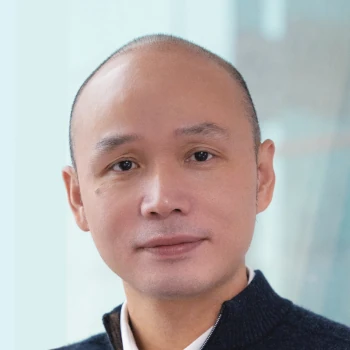
Kun Tang
Kun Tang Founder & CEO

The dangers of getting scammed by agencies using AI text generators get bigger in the recent times with algorithms like ChatGPT4o and Jasper creating “okay-ish” Chinese text quality compared to not-readable texts such content spinner tools would create in the past. We can add an Chinese content quality assurance step to your already in-place content creation process without the ne need of switching agencies. We just want to help.

Let’s have a first free consultation and see what we can do for you!

— Kun

Let's Talk Strategy

What is our target platform for your Chinese Content